

Mission-Aligned AI & Analytics
You gain practical, responsible AI solutions aligned with your strategic and operational objectives.
End-to-End Data Capabilities
From data engineering to machine learning and AI orchestration, we support your full analytics lifecycle.
Vendor-Agnostic Flexibility
Your solutions are adaptable, scalable, and designed to evolve with changing technologies and mission needs.
Sustainable, Measurable Impact
We help you build trusted capabilities that drive real outcomes and long-term value.
IBR helps you harness data, analytics, and artificial intelligence (AI) to improve efficiency, insight, and decision-making. We work with you to understand your data landscape, key business questions, and operational realities moving your initiatives beyond experimentation and into practical, mission-aligned use. Our focus is on applying AI and data science in ways that are responsible, transparent, and built to support your long-term goals.
Through our collaborative network of leading data, analytics, and AI technology partners, we bring together the right skills and tools to deliver results. We support you across data engineering, modeling and simulation, business analytics, machine learning (ML), and AI agent orchestration while helping you address data quality, governance, strategy, and scalability. Our vendor-agnostic approach ensures your solutions can evolve as requirements, technologies, and data sources change.
We emphasize sustainability and measurable impact. We help you build AI and data capabilities that can be trusted, maintained, and expanded throughout the product lifecycle. From adoption and knowledge transfer to continuous monitoring and improvement, we position your investments to deliver lasting value.
Data Management
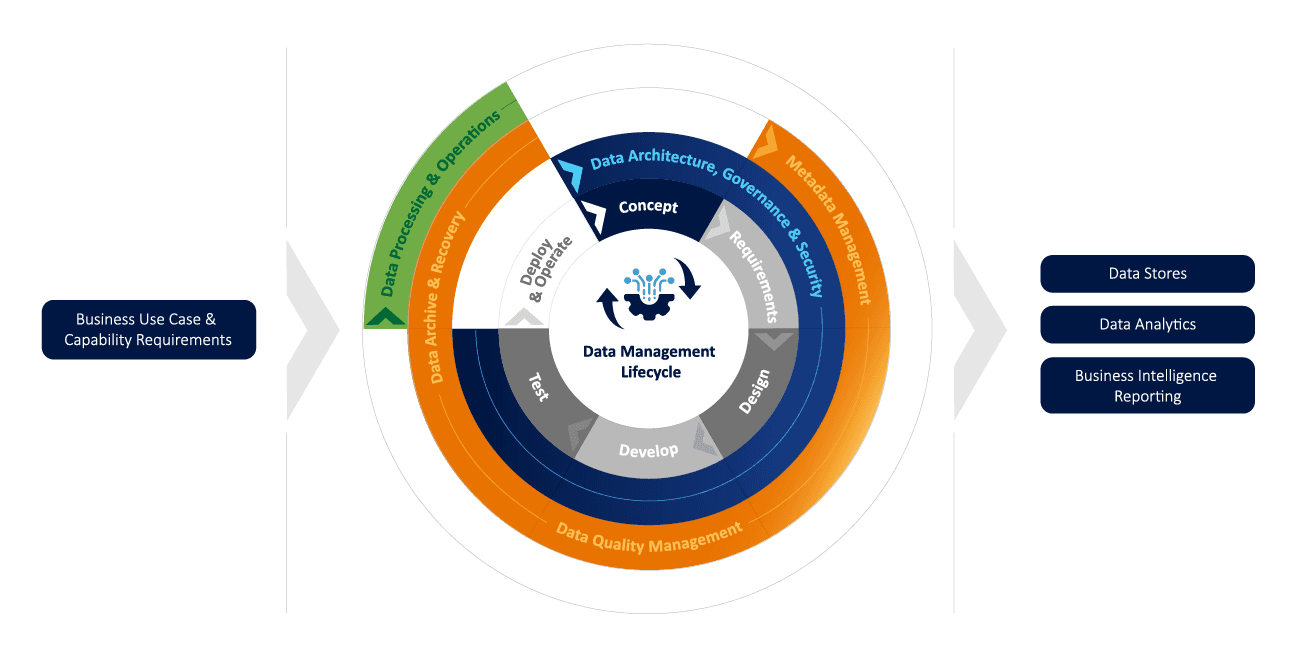
IBR's Data Management Center of Excellence (CoE) starts with a foundation of defined management plans and mature enterprise policies using ITIL 4.0 and PMBOK Edition 7 best practices. These plans and policies feed into the Data Management Lifecycle using agile methodology to build and manage various Data Functions.
Data Governance
Data Governance is a framework of policies, procedures, and standards that ensure data is managed efficiently and securely throughout the data lifecycle. Implementing data governance enhances decision-making, mitigates risks, and improves compliance, ultimately driving operational efficiency and maximizing the value of data assets.
Data Security Policy
A Data Security Policy outlines the measures and protocols put in place to protect sensitive information from unauthorized access, breaches, or leaks. Implementing a robust policy helps business safeguard their valuable assets, build trust with customers, comply with regulations, and mitigate financial and reputation risks associated with data breaches.
Data Management Plan
A Data Management plan is a comprehensive strategy outlining how an organization collects, organizes, stores, and utilizes its data assets to achieve its goals efficiently and effectively. The well-defined plan helps increase productivity and drive innovation, ultimately leading to better business outcomes and competitive advantage.
Cost Control Management Plan
A Cost Control management plan is a strategy designed to monitor, regulate, and optimize services for data and IT systems to ensure financial stability. By implementing these cost measures, businesses can allocate resources more efficiently and improve budgeting accuracy.
Your data needs constant care and feeding through strong Data Operations Support mechanisms to maintain data usability and integrity.
Without a proper foundation, many well-constructed data lakes and data warehouses can become “data swamps” of disorganized pools of data that are difficult to use, understand, maintain, and share across the enterprise. The greater the quantity and variety of data, the more significant this problem becomes and uncontrollable to manage.
IBR has learned through our in-depth 2010 and 2020 Decennial experiences that many problems can be avoided through timely effective management methods. For example, problems may include undetected duplications across and within data stores, incorrect sourcing/usage conflicts (data should be for a specific purpose), and misinterpretations of various versions of data. These problems obstruct the correct understanding of the stored information due to insufficient consistency and standardization, unshared data across enterprise components (due to privacy/security constraints), misinterpretations of source data contexts, and unspecified future usage of the data.
Data persistence is also an under-controlled aspect of data, in which data may partially flow through the enterprise to “pockets” of storage within the enterprise but do not reach the expected destination on time. In all these issues, the “life cycle” of the data must be defined, collaborations/sharing and timeframes identified, and records management requirements considered. Enterprise data architecture addresses these risks, and IBR's Data Management protocols are designed to prevent and mitigate these problems by establishing basic foundational governance principles, practices, standards, and documentation.
Core Components
Once these building blocks are in place the data core components can be implemented with a focus on the following:
Data Architecture
Data Architecture refers to the structure, organization, and integration of data assets within an enterprise enabling efficient data storage, retrieval, and analysis. Enterprise data architecture helps streamline operations, enhances scalability, and maximizes value from data assets, ultimately driving innovation and competitive advantage.
Metadata Management
Metadata Management involves the creating, maintaining, and utilizing information that describes various facets of data which provides context and structure. This facilitates understanding, accessibility, and usability across the enterprise. Effective metadata management improves data quality, accelerates data discovery, and drives better data decision-making.
Data Quality Management
Data Quality Management involves business processes and policies that ensure and maintain data accuracy, consistency, completeness, and reliability throughout the data lifecycle. Implementing Data Quality at an enterprise level helps to build senior management and customer trust and the enterprise focuses on analytics and reporting instead of fixing and remediating data issues.
Data Archive & Recovery
Data Archive & Recovery involves design and implementation methods and considerations necessary to retain consistent performance and to provide the ability to “rewind” data to a prior state in manageable pieces for operational nimbleness and data integrity. By establishing a robust data archive and recovery process, the enterprise mitigates the risk of data loss, protects valuable information assets, and safeguards against potential risk and damage.
Data Management Complexity
As you can see, Data Management is a series of complex and involved processes with several feedback mechanisms. When it comes to the implementation of a Data Management ecosystem, IBR's Data Management CoE follows these simple principles in helping customers to make the most of their data.
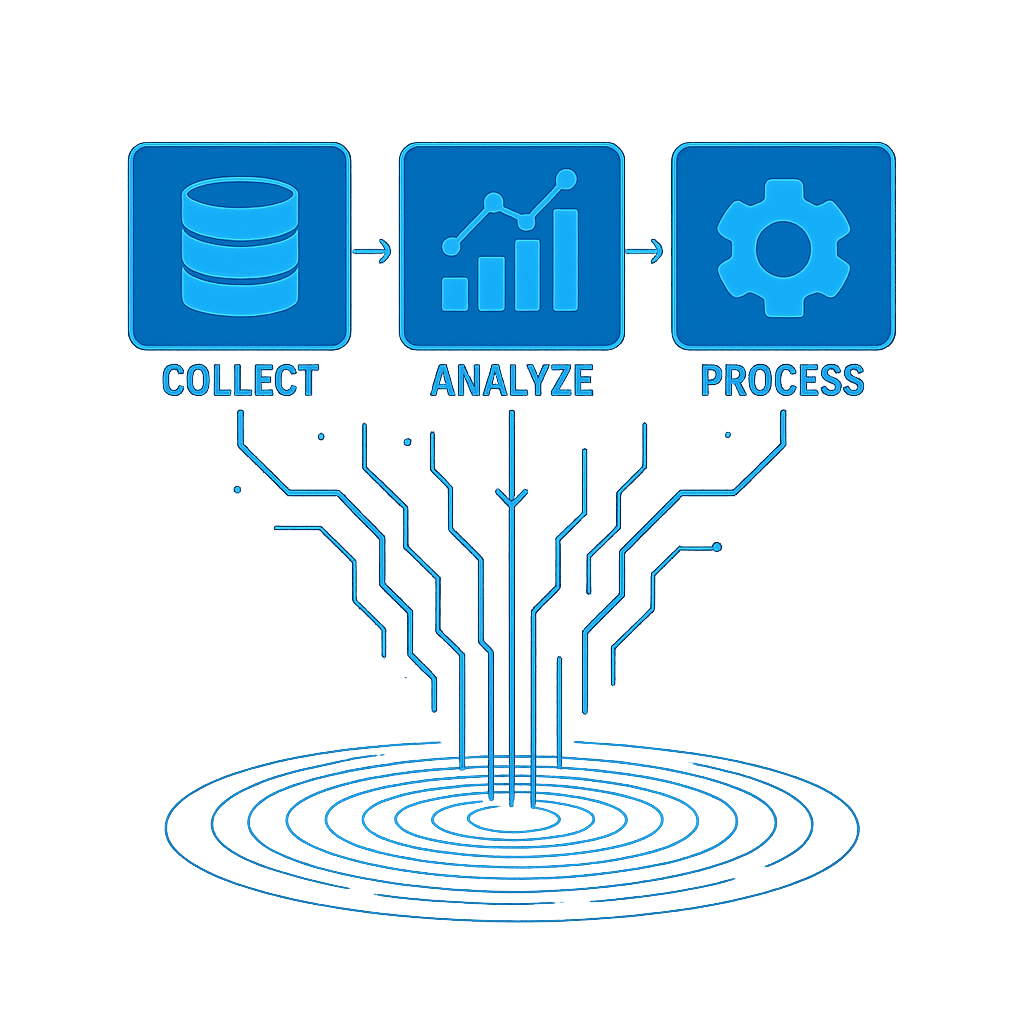
6 Steps to Successful Data Management
- Dip your toe. Don't dive straight in. At IBR, we believe in utilizing an agile approach for everything we do. It can be tempting for companies to pull all sorts of data sources into a data lake and start experimenting thinking that is a valid agile approach. Instead, it's best to start small, with a couple of clearly defined projects that can tackle a known problem. Find something that can offer a quick win and you can enjoy a good return on investment and gain valuable knowledge of what you need to make your data work effectively before rolling out large-scale plans.
- Focus on data quality and shared Metadata. One of the biggest barriers to success in data management is data that is of poor quality, inaccurate, or outdated. Cleaning up data before it is used in any analytics process is therefore essential. In addition, periodic cleaning must be an ongoing effort to identify and delete duplicate data, spot data that are no longer relevant, and identify inconsistencies against defined Metadata standards.
- Keep access simple but security strong. It's a delicate balance between convenience and security. Ensure that everyone has the level of access appropriate for their role while remaining compliant with privacy concerns and regulations like the EU's GDPR.
- Don't forget about operations. Operational details can erode performance or lead to undetected breaches. Establish systematic and repeatable processes to monitor, secure, recover, and archive enterprise data efficiently.
- Not everyone is equal. A tiered support model (Platinum, Gold, Silver) allows flexibility in service delivery while managing costs. IBR applies a cost charge-back model to align resources with business priorities.
- Analytics. Incorporate analytics throughout the data lifecycle to maximize insight generation. Cleanse, transform, and organize data for descriptive, diagnostic, and predictive analytics that drive meaningful decisions.
Get In Touch
Any question? Reach out to us and we'll get back to you shortly
- (407) 459-1830
- info@teamibr.com
- 1017 Pathfinder Way,
Suite 100 Rockledge, FL 32955